
Le Vie di Francesco
The Valmarecchia has always been a land of passage, and Saint Francis himself travelled through it on several occasions.
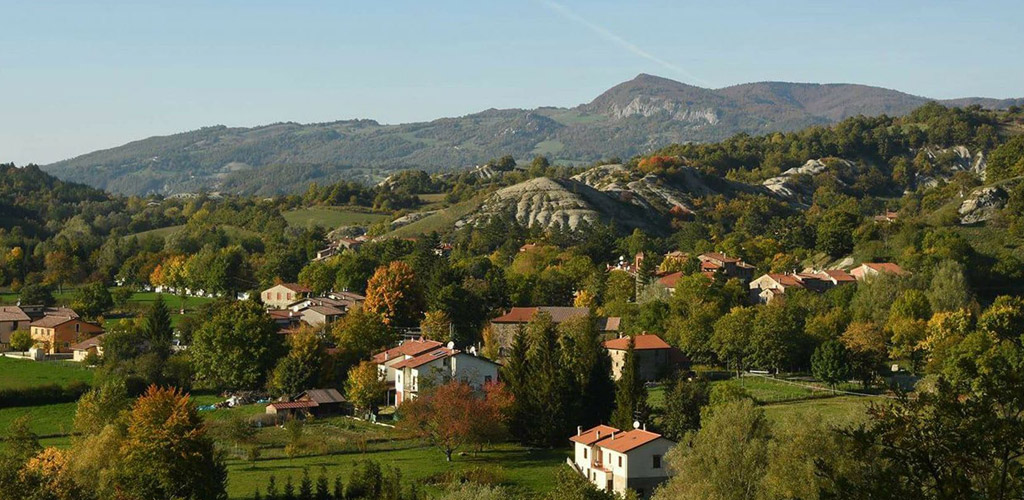
In May 1213, on one of his journeys, Francis — accompanied by Brother Leo — arrived at the castle of Montefeltro (the ancient name of San Leo) and preached in the square before the people and the nobility.
Among those present was Orlando Catani, Count of Chiusi in the Casentino, who, moved by Francis’s words, asked to meet him privately, and at the end of their conversation donated Monte della Verna to him.
Tracing the paths walked by Saint Francis and the places of significance in his story, a number of itineraries have been developed to introduce them to pilgrims and hikers: the Cammino di San Francesco (Way of Saint Francis) from Rimini to La Verna passes through Badia Tedalda along the route from San Leo to the Passo di Viamaggio; and Le Vie di Francesco in Toscana (The Ways of Francis in Tuscany), following the route from the Eremo di Cerbaiolo (Hermitage of Cerbaiolo) to the Sasso di Simone, passes through both Badia Tedalda and Sestino. In August 2023, the Tibetan Bridge on the Ways of Francis in Tuscany was inaugurated, in the locality of Fresciano di Sotto.
In Badia Tedalda, only a segment of these routes can be walked, as it represents one of the many stages into which they are divided. Nevertheless, to commemorate the passage of Saint Francis through our territory, a local circular route has been created, retracing an ancient road travelled by — among others — the Saint himself, and later by all the pilgrims making their way from the Adriatic coast to the Sanctuary of La Verna or to Assisi.
(We always recommend visiting our website or contacting us for further and up-to-date information on the trails and their current conditions.)
For further informations
Ass. Pro Loco di Badia Tedalda
Via Alpe Della Luna, 4
452032 – Badia Tedalda (AR)
The Road of the Moon
The Strada della Luna (Road of the Moon) connects Badia Tedalda with Borgo Pace, linking the Tuscan and Marchigian communities of this stretch of the Apennines, passing through small rural settlements and ancient villages where nature remains unspoilt and human activity has never altered its appearance.
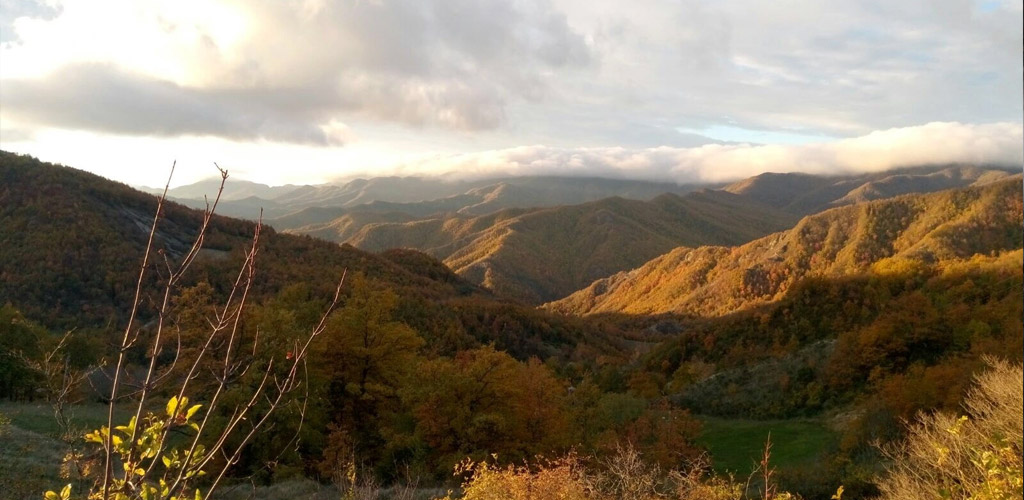
A road travelled over the centuries by wayfarers, merchants and pilgrims, but also by illustrious figures from our history such as Saint Francis, Dante and Piero della Francesca.
Acquaviva, Castellacciola, Ca’ Metrogno, Montelabreve and Gorgoscura are among the small rural hamlets where signs of human presence can still be glimpsed, and where, between bends and ascents, one can stop to admire beautiful vistas.
From the Strada della Luna, trekking and mountain bike routes set off — including the Sentiero dei Contrabbandieri (Smugglers’ Trail) and the Sentieri della Linea Gotica (Gothic Line Trails), which recount the events of the Second World War that was fought in these very lands; other routes lead to the waterfalls of the Presalino or those of the Gorgoscura valley.
(We always recommend visiting our website or contacting us for further and up-to-date information on the trails and their current conditions.)
For further informations
Ass. Pro Loco di Badia Tedalda
Via Alpe Della Luna, 4
452032 – Badia Tedalda (AR)
Transhumance and the Via dei Biozzi
Transhumance represented for centuries a phenomenon of great importance for the local economy, which has always been tied to livestock farming, the use of woodland resources and subsistence agriculture. It is a form of animal husbandry that involved an annual double journey by shepherds and their flocks from the Apennines to the Maremma and back, according to the season.
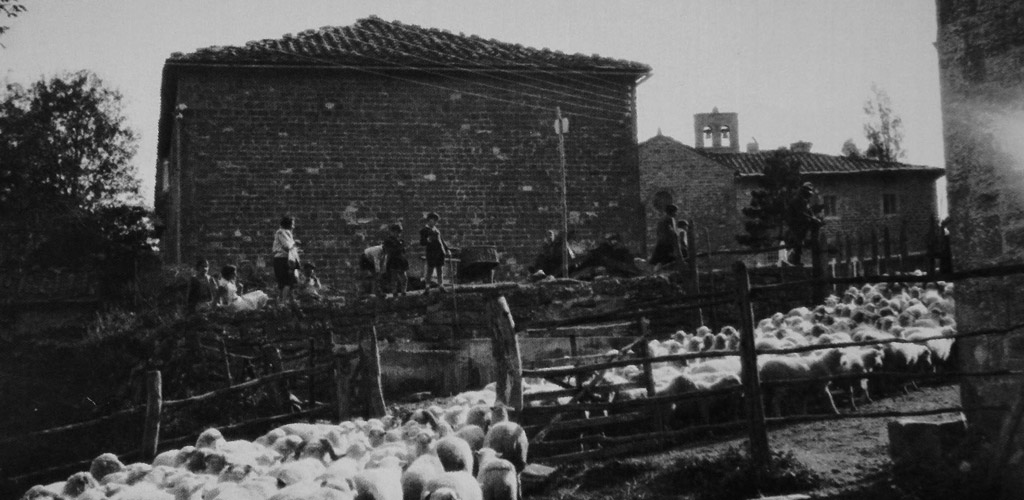
The phenomenon of transhumance has profoundly shaped many material aspects of life — from working tools to items of clothing, from culinary recipes to remedies against illness — as well as language, mindsets and traditions.
The Via dei Biozzi is one of the transhumance routes, the easternmost in Tuscany, descending from the Tuscan-Romagnol Apennines down to the Maremma. It takes its name from the Biozzi family, the largest landowners and livestock farmers of the Upper Val Marecchia: originally from Bagno di Romagna, they held lands, herds and flocks throughout the area, but above all in the territory of Badia Tedalda, where their largest estate was located at Viamaggio. It was from the Viamaggio farm that every September thousands of sheep — along with cattle and horses — set off on a journey that would bring them to the Maremma in ten days.
The itinerary that follows this ancient route stretches for 230 km, passing through the provinces of Arezzo, Siena and Grosseto.
View the full itineraryFor further informations
Ass. Pro Loco di Badia Tedalda
Via Alpe Della Luna, 4
452032 – Badia Tedalda (AR)
The Pratieghi Protected Natural Area — Taxus Baccata Groves
The Area Naturale Protetta di Interesse Locale (Locally Protected Natural Area) — Nuclei di Taxus Baccata di Pratieghi is a predominantly wooded natural environment featuring the rare forest type known as Tilio-Acerion, here characterised by an unusual abundance of yew trees (known locally as Nasso or Albero della Morte — (Tree of Death)).
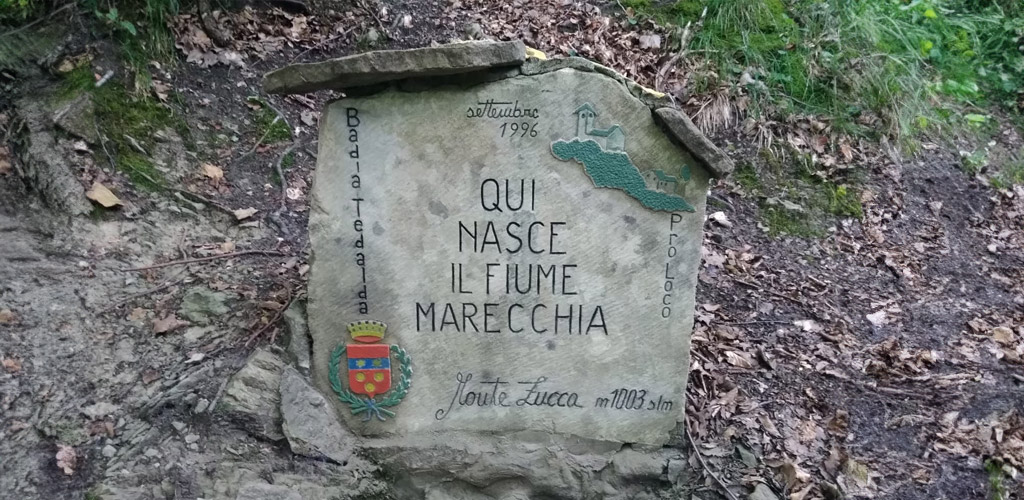
Within the ANPIL of Pratieghi it is possible to find clusters of yew specimens, with trees exceeding six metres in height and others reaching up to ten metres.
The yew is a conifer that has become increasingly rare in Europe, both due to the widespread use made of it in the past — its wood being highly elastic and resistant, and therefore much sought after for the making of bows and other implements — and due to the effects of climate change.
The woodland is home to birds such as the woodpecker and birds of prey such as the buzzard and the sparrowhawk. At dusk it is easy to encounter roe deer leaving the safety of the forest in search of grasses and shoots.
From Pratieghi, a circular nature trail sets off through the protected area, also leading to the source of the River Marecchia. The source lies on the slopes of Monte Zucca, at an altitude of 930 metres, in the midst of a dense beech forest. Before flowing into the Adriatic Sea near Rimini, the River Marecchia travels approximately 70 kilometres through the surrounding territory, lending its name to the valley and marking the geographical boundary between northern and central Italy.
For further informations
Ass. Pro Loco di Badia Tedalda
Via Alpe Della Luna, 4
452032 – Badia Tedalda (AR)
Residential Environmental Education and Sport Summer Camps
The main objective of the Residential Summer Camps is to transform the summer period into a valuable time in which to offer children support along their path of growth, giving them the opportunity to meet other children with whom to share and experience the dimensions of play, creativity and exploration.
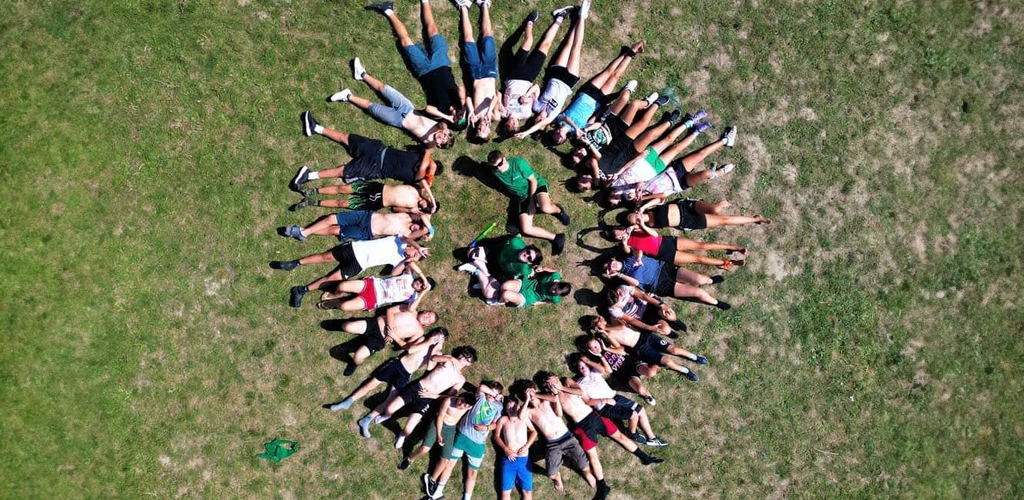
Children at the centre
The intervention methodology that characterises all the socio-educational services for children organised and managed by the “La Rondine” Cooperative during the summer period places children as active protagonists of the experience, rather than mere recipients of it.
For this reason, the structuring of activities always takes into account the needs of children in relation to their age and their emotional and relational development. The pedagogical project, extensively tested over the years, is reviewed, updated and improved annually by the working team (coordinator and educators) and will take into account the social context in which it will operate.
Every moment of the day is important in the life of a summer camp, because the way they flow into one another gives rhythm to the child’s time and helps contain any anxieties that the new environment may create, thanks to the reassurance that repetition and predictability provide.
Small group conversation sessions, in which children can give voice to their own experiences, will be valuable opportunities for educators to pick up on children’s needs and work together to build appropriate responses on a relational and play-based level, reshaping activities and spaces on the basis of the level of enthusiasm expressed. We believe, in fact, that children’s wellbeing is linked above all to the overall relational atmosphere that the summer camp fosters, which can make participation in play activities enjoyable and stimulating — or, conversely, strip them of all meaning.
Play will be at the centre of every moment of the day, giving children the opportunity to develop their own abilities through both free and structured play, always in the presence of educators.
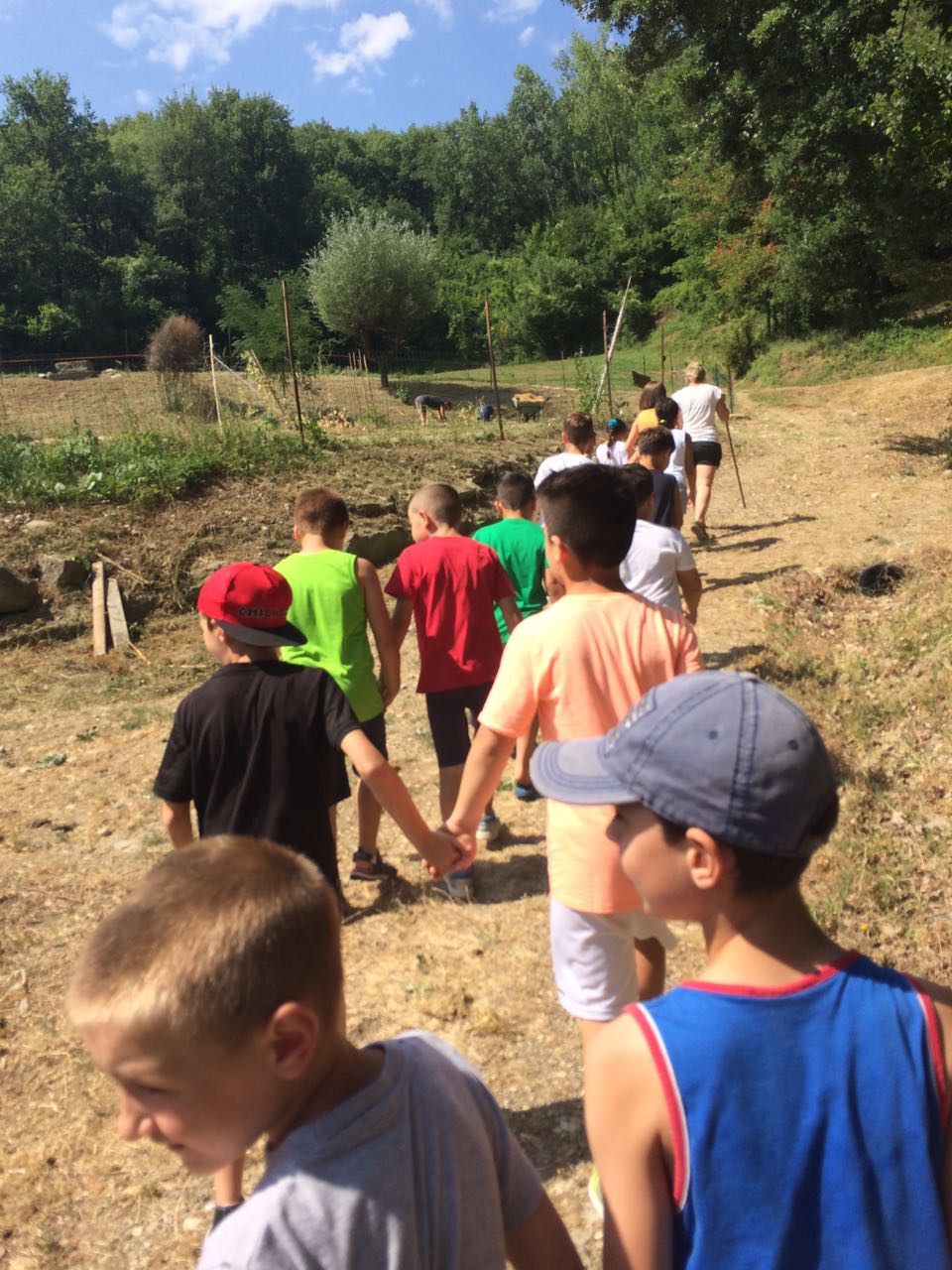
The activities that will be developed through the Residential Summer Camp will focus on the following areas:
- play
- workshops
- psychomotor activities
- outings in the local area
- group work.
Psychomotor activities for children support the development of the young child in a context that prioritises the pleasure of play, action, movement and relationship. Psychomotor intervention can therefore be conceived as a “facilitator” that supports the child’s development, accompanying them in the construction of their own identity. We will dedicate an entire day to this activity in collaboration with ASD Volley Revolution.
Outings will be organised across the municipalities of Badia Tedalda and Pieve Santo Stefano, aimed at discovering the territory and the nature surrounding the Piscina Nera facility, in collaboration with the Pro Loco di Badia Tedalda.
The working group that delivers the educational project brings together a range of different skills and responsibilities, all aimed at achieving the objectives set out above.
Poter contare su un gruppo di educatori che integrano la comune competenza ed esperienza educativa con competenze specifiche e differenziate, è un punto di forza del progetto educativo, in quanto consente di offrire ai bambini esperienze diverse altamente qualificate, unite alla continuità educativa che può essere garantita soltanto da un gruppo di educatori stabile, organizzato secondo un modello che tende ad individualizzare la relazione (piccoli gruppi di bambini seguiti dagli stessi “educatori di riferimento”).
A living tradition
History has handed down to us an unmistakable product — a treasure chest of local history, culture and tradition, of which we in Pieve Santo Stefano are truly proud.
[galleria_progetto]
We are pleased to collaborate with





For further informations
Cooperativa La Rondine

Via Achille Grandi, 10/i
Città di Castello
Tel. 075 852 0735
Primo gruppo di Link
- Titolo del primo link
- Titolo del secondo link
- Titolo del terzo link
Secondo gruppo di Link
- Titolo del primo link
- Titolo del secondo link
- Titolo del terzo link
Terzo gruppo di Link
- Titolo del primo link
- Titolo del secondo link
- Titolo del terzo link
The Village on Paradise: Montebotolino between Art and Storytelling
“You lean against a slender wooden railing over an abyssal void, and dizziness takes hold at once. We no longer know whether the sky is above or below us. We are the sky, and our gaze flies free across the broad valley of the Marecchia Montebotolino, a tiny hamlet of Badia Tedalda, is capable of stirring such feelings. Perched high on a cliff edge — known locally as Il Paradiso (The Paradise) — stands this ancient village, once a stronghold of the Catani, nobles of Lombard origin who later settled in Florence.
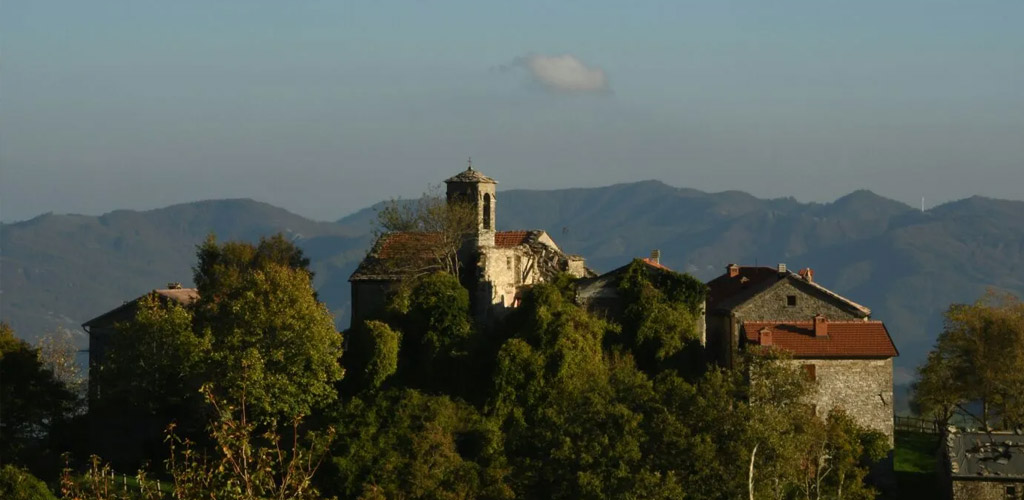
Set upon a rounded hilltop, the layout of the settlement of Montebotolino, clustered so tightly around its church, clearly points to medieval origins.
Documented as a castrum (fortified settlement) in 1232 and as a palazzo with tower in 1290, when it was sold to the abbot of Badia Tedalda, no visible traces of these ancient buildings remain today. Inside the church stands an altar ancona featuring a glazed polychrome terracotta depicting “The Incredulity of Saint Thomas”, attributed to Santi Buglioni (c. 1530) and recently restored by the Soprintendenza alle Belle Arti (Fine Arts Authority) of Arezzo
From generation to generation, popular memory has passed down its “favolelli” — ironic tales in which the village’s inhabitants gently and playfully poke fun at themselves (see “Il Paese sul Paradiso”, published by Pro Loco Badia Tedalda). In 1998, Montebotolino was the focus of a conference held in Badia Tedalda, attended by authorities and representatives from Tuscan localities that share an identical tradition.
The University of Padua subsequently launched a research project into this distinctive oral culture across various European countries, known as the Arianna Programme, funded by the European Union. The project highlighted the similarities present in the collective oral heritage of peoples from the shores of the Mediterranean to those of the Baltic, specifically researching texts similar to those of Montebotolino on the theme of “simpletons” and their behaviour. Stories have so far been found in France, Denmark and Finland (see “Tutto il mondo è paese” — (Every Country is the Same)).
A living tradition
History has handed down to us an unmistakable product — a treasure chest of local history, culture and tradition, of which we in Pieve Santo Stefano are truly proud.
[galleria_progetto]
We are pleased to collaborate with
For further informations
Ass. Pro Loco di Badia Tedalda
Via Alpe Della Luna, 4
452032 – Badia Tedalda (AR)
Primo gruppo di Link
- Titolo del primo link
- Titolo del secondo link
- Titolo del terzo link
Secondo gruppo di Link
- Titolo del primo link
- Titolo del secondo link
- Titolo del terzo link
Terzo gruppo di Link
- Titolo del primo link
- Titolo del secondo link
- Titolo del terzo link
The “Tortello della Pieve”
At the heart of the Repubblica delle Foreste, this project aims to transform the “Tortello di Pieve Santo Stefano” from a simple traditional dish into a distinctive culinary symbol. The DOP (Protected Designation of Origin) trademark registration will not only safeguard its unique recipe but will open new prospects for the local community.
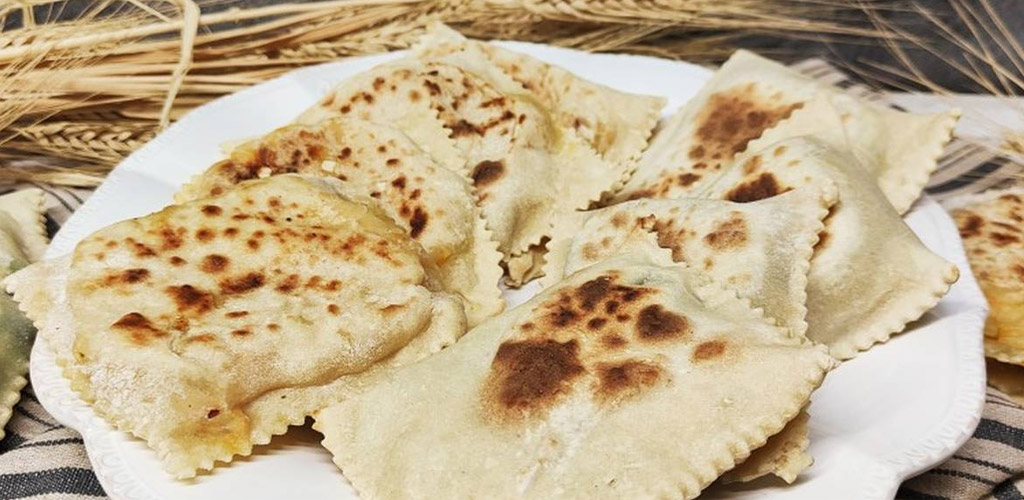
The Tortello della Pieve is a speciality of the Tuscan-Romagnol Apennines
The tortello alla lastra is a traditional speciality of the Tuscan-Romagnol Apennines, a testament to the peasant culture of this area — a culture often shaped by practical necessity, but above all by a deep awareness of food waste, born from the need to make ends meet in family households that frequently numbered eight, ten or more people.
The technique of cooking pasta on a flat stone heated over a fire reflects the nomadic lifestyle of those who used it: finding a suitable stone slab on the spot was certainly more practical than carrying cooking vessels for boiling water. This connects naturally to the theme of transhumance — the seasonal migration of flocks which in this area moved from Sestino, Badia Tedalda and the fields around Pieve towards the Tuscan Maremma.
This journey took place at the beginning of the warm season, in search of cool areas where green pastures could be found for the livestock. At the onset of the cold season, the flocks would move once again towards the warmer lowlands. All of this took place along ancient droving paths known as tratturi (transhumance trails). The journey lasted several days, with stops at established locations known as “stazioni di posta” (staging posts), or more simply “poste”.
A living tradition
History has handed down to us an unmistakable product — a treasure chest of local history, culture and tradition, of which we in Pieve Santo Stefano are truly proud.
[galleria_progetto]
How the project will be developed
The Pro Loco of Pieve Santo Stefano has traditionally been responsible for producing the legendary tortelli on the occasion of local festivals. The project has provided the Pro Loco with a professional kitchen and the resources needed to produce the “Tortello della Pieve” throughout the year, for distribution at retail outlets within the municipality and beyond, making this speciality available all year round and turning it into an opportunity for enterprise and employment.
We are pleased to collaborate with
For further informations
Ass. Proloco Pieve Santo Stefano A.p.s.
Via Roma ,5
52036 Pieve Santo Stefano (AR)
tel: +39 331 2111628 (Alessio Cipriani, Presidente)
mail: ass.prolocopieve@gmail.com
Primo gruppo di Link
- Titolo del primo link
- Titolo del secondo link
- Titolo del terzo link
Secondo gruppo di Link
- Titolo del primo link
- Titolo del secondo link
- Titolo del terzo link
Terzo gruppo di Link
- Titolo del primo link
- Titolo del secondo link
- Titolo del terzo link